



May 14, 2021
The Pros Of Machine Learning
The basic premise of search engine reputation management is to use the following three strategies to accomplish the goal of creating a completely positive first page of search engine results for a specific term.

Electronics Jammer market size in India
Introduction
Electronic Jammers is the act of using any available device to disrupt, deny, or disable an enemy’s electronic devices.
The jammer plays a crucial role in modern-day warfare.
Jamming systems are used in the military and law enforcement to protect communications. They are also used to disrupt enemy communications, protect sensitive equipment and prevent interference with other military operations. In fact, a large number of modern-day weapons systems rely on jammers to ensure their effectiveness at all times.
Various models of jammer devices have been used over the years.
Jamming systems are also used for security and safety purposes, such as law enforcement. Military forces use an electronic jammer to denial of radio signals and other communications. The most common type of jammer is based on a directed-energy weapon that uses high-power microwave energy to disrupt incoming signals from radar systems or other types of communication equipment.
Other types of jammers include those that block radio waves and those that block infrared light waves .
The jammer is possibly the most effective technique that can protect ground forces from enemy fire during conflict.
The jammer is possibly the most effective technique that can protect ground forces from enemy fire during conflict. It is used to disrupt enemy communication, radar and targeting devices of both air and ground vehicles. The jamming equipment comes in different types; these include:
- Mobile Jamming Systems
- Man-Pack Jammers
- Anti-IED jammers
- Convoy Protection Jammers
- wi-fi jammer
- Anti-Drone Jammers
Communication is a huge part of any military offensive strategy, and jammers are used to disrupt enemy communication while allied forces operate behind enemy lines.
Jamming is a form of electronic warfare. It is used to disrupt enemy communication while allied forces operate behind enemy lines. Jamming can also be used to protect ground troops, air forces, and naval forces in their operations against the enemy.
Electronics Warfare is an important component of modern warfare
Electronics warfare (EW) is the use of electronic devices and systems to counter, deny or destroy enemy military forces. Electronic warfare includes the use of jammers, decoys, deception and computer network operations.
Electronics jamming can be used to protect and disrupt communication, radar, GPS navigation systems and cell phones among other things.
Electronics Jammer market size
As per Electronic Warfare Market Size Worth $27.79Bn, Globally, by 2028 at 6.2% CAGR – Exclusive Report by The Insight Partners
The global electronic warfare market size is projected to reach $27.79 billion by 2028 from $18.19 billion in 2021; it is expected to grow at a CAGR of 6.2% from 2021 to 2028.
In APAC, the surge in economies and technological advancements support the growth of diversified industries and markets, including the military. India, China, South Korea, and Japan are countries with greater military strength. These countries invest huge resources in military operations, which allows them to deploy advanced systems and technologies, including electronic warfare systems.
Furthermore, in 2020, China, India, Japan, South Korea, and Australia allocated US$ 252.3 billion, US$ 72.8 billion, US$ 49.1 billion, US$ 45.7 billion, and US$ 27.5 billion, respectively, to strengthen their military operations. Thus, these initiatives are further expected to contribute to the growth of the electronic warfare market size over the forecast period. The growing concern for electronic protection capabilities is further supporting the electronic warfare market.
Source: GlobeNewsWire
Conclusion
We have looked at the size of the Electronics Jammer market in the world / India. We also looked at the various types of jammers and how they are used by military forces for various purposes. Finally, we discussed some key factors that will affect the growth of this market over time
Machine learning in simple terms is the branch of artificial intelligence that enables systems to learn and improve from different data, patterns, and manners of input without being programmed explicitly. It is generally used to further develop computer programs and build different analytical models.
Like every technological branch and concept, machine learning has its pros and cons. Here are the pros of this concept of artificial intelligence:
Easy identification of trends and patterns
This is one of the prime advantages of machine learning where it harnesses its ability to review large amounts of data and input that isn’t apparent to humans. Machine learning has the capability of pointing out basic relations between two events, this enables effective data mining, on a continual and on-going basis, as per algorithm requirement.
Improvement in processing over time
Machine learning betters over time not only in terms of efficiency but also accuracy and all the credit goes to the ever-increasing type and amount of data that requires processing, making the system smarter and high performance by increasing the machine’s learning experience for more informed and articulate decisions and predictions.
Seamless Adaptability
The basic advantage of machine learning is its adaptability to a particular system without any requirement of human intervention. Machine learning can identify threats, viruses, trends, and security breaches to a system to safeguard it and help implement appropriate measures. Machine learning also terminates the gap between the identification of new threats and issues of response.
Automated
Machine learning has in-built abilities of automation which in-turn saves money, time, and labor of the designers, developers, and programmers so that they can freely perform advanced computing tasks to take the program and development forward increasing productivity, predictability, and consistency in operations.
Our stable machine-learning applications are seamless and highly functional with the client’s business model and are integrated accurately for business growth in various innovative ways. to the various advancements in the technological industry ways of transferring data are ever-evolving.
Related Blogs
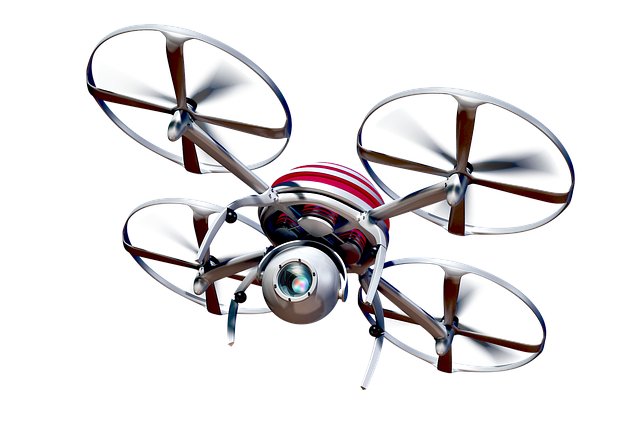
Exploring the Benefits of Next Generation Anti-Drone Systems for Increased Security
A drones become increasingly popular for recreational use and for commercial purposes, the security of public and private spaces is becoming a growing concern.